
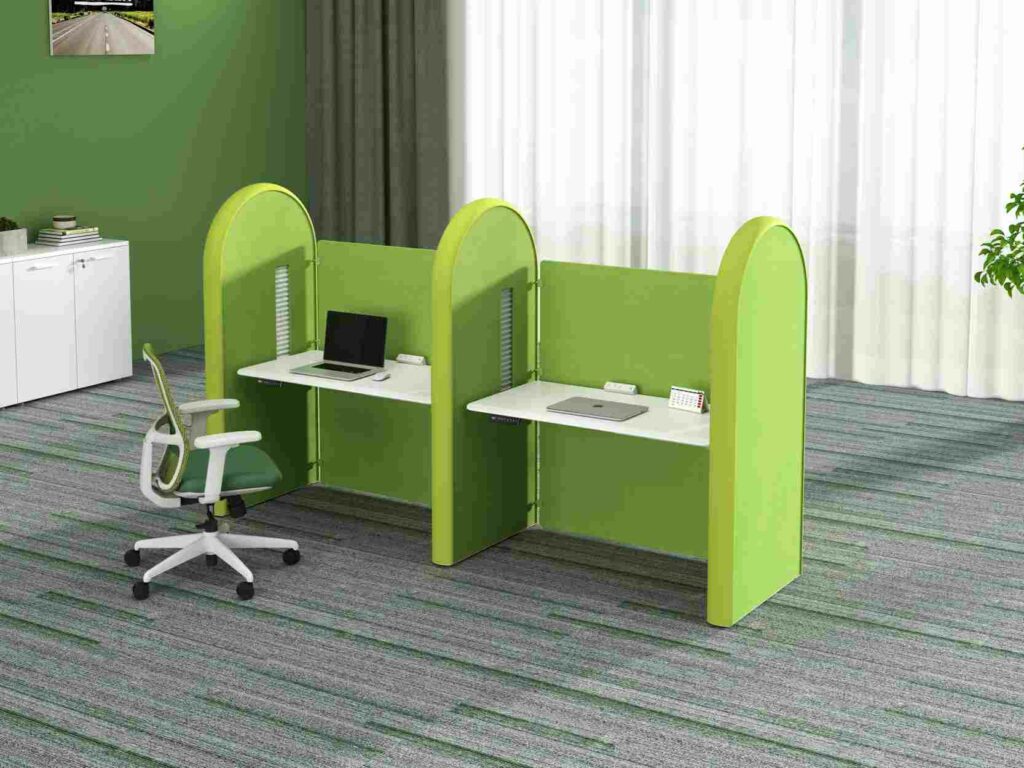
The Imbalance of Attention in Open Offices
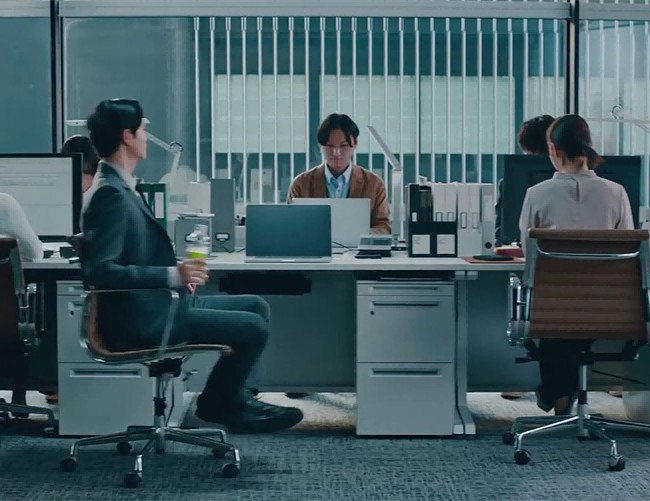
Over the past decade, open-plan offices have become the dominant workspace model.
While they improve communication efficiency, they have also subtly reshaped how we work.
Constant noise, overlapping sightlines, and frequent interactions
continuously interrupt attention, making focus something that must be deliberately maintained.
Productivity is no longer determined solely by individual capability.
It increasingly depends on the stability of the environment.
When space lacks structure,
people are left to constantly fight against the resulting chaos
From “Dividing Space” to “Organizing Behavior”
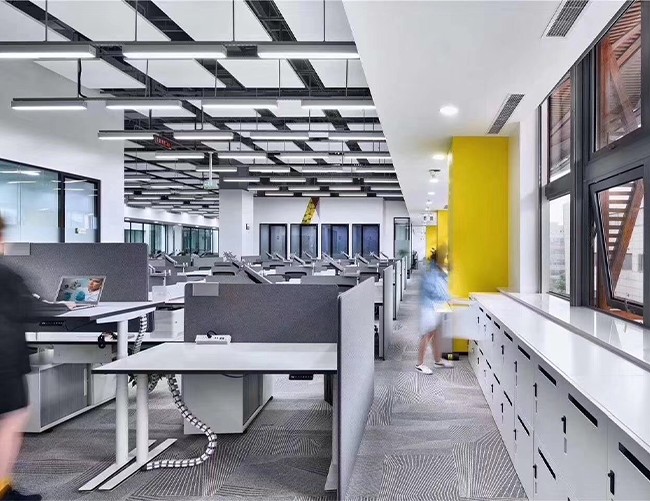
Traditional office layouts rely on clear physical divisions—walls and partitions—to define functions.
While this creates order, it also introduces rigidity.
Once established, spaces are difficult to adapt.
In today’s evolving work environment,
organizational structures and work patterns are constantly changing.
Space is no longer just a container for activities—
it must become responsive.
The focus of design is shifting
from dividing space to organizing behavior.
Against this backdrop,
The Cocoon Space Desk AK-GDZ-TYZB2-M02 modular acoustic workspace systemoffers a more adaptive solution.
Each unit can function independently
or be combined to form more complex spatial configurations.
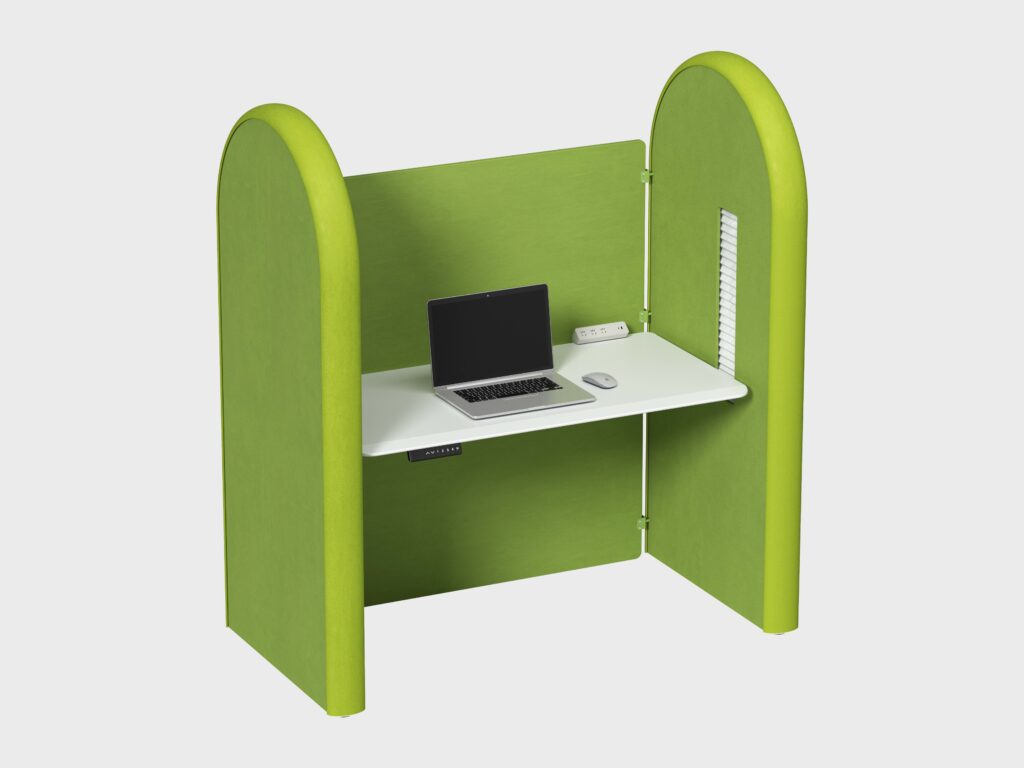
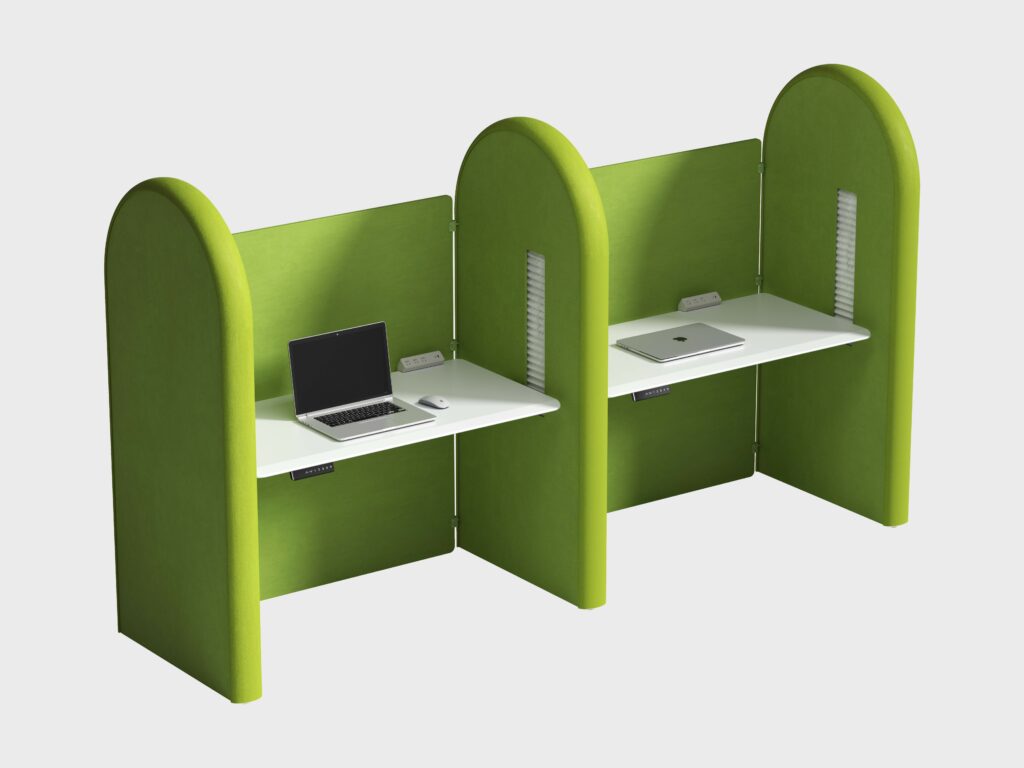
This modular logic transforms space from a fixed outcome into an evolving system.
- In high-density offices, it improves space efficiency
- For creative and R&D teams, it supports seamless switching between focus and collaboration
- In flexible workplaces, it adapts to dynamic team structures
Space is no longer static—
it gains the ability to grow and evolve with organizational needs.
Reducing Distraction, Not Eliminating It
In open offices, eliminating all distractions is unrealistic.
A more effective approach is to reduce their impact.
The system achieves this through structural and material strategies:
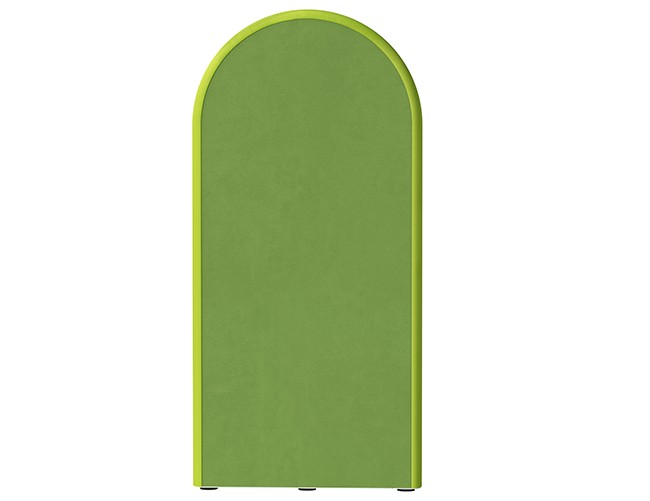
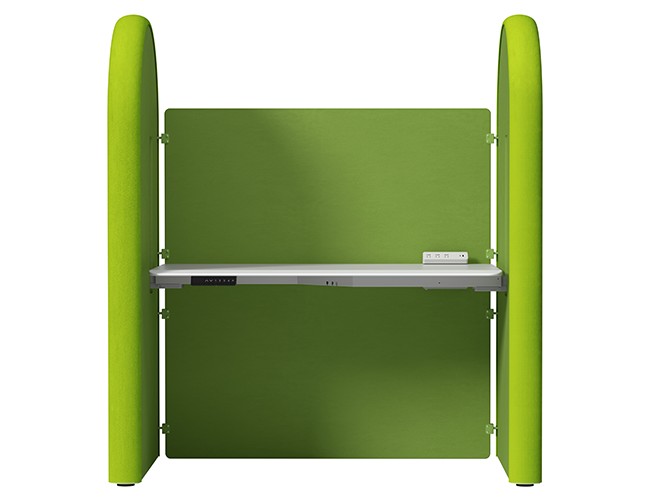
- Curved forms replace rigid linear cuts, creating smoother spatial transitions
- Semi-enclosed boundaries provide privacy without a sense of confinement
- Built-in acoustic buffering reduces ambient noise
- Partial visual shielding minimizes unnecessary visual input
These boundaries are not meant to isolate,
but to guide users into specific states of focus.
When distractions are kept below a certain threshold,focus can naturally sustain itself.
Designing for Emotion and Cognition
Space influences not only behavior, but also emotional and cognitive states.
In this system, color is treated as a key variable.
Natural green tones are introduced to reduce visual stress
and alleviate fatigue during long working hours.
Combined with soft forms and clean interfaces,
the space creates a sense of calm, natural order.
👉 Helping users maintain a steady rhythm and reducing cognitive load.
Integrated Design for Everyday Efficiency
Efficiency is not the result of a single feature,but of systematically reducing friction.
The AK-GDZ-TYZB2-M02 integrates multiple practical optimizations:
- Built-in power access on the desktop reduces cable clutter
- Balanced structure ensures both stability and lightweight installation
- Organized cable management minimizes visual and operational distractions
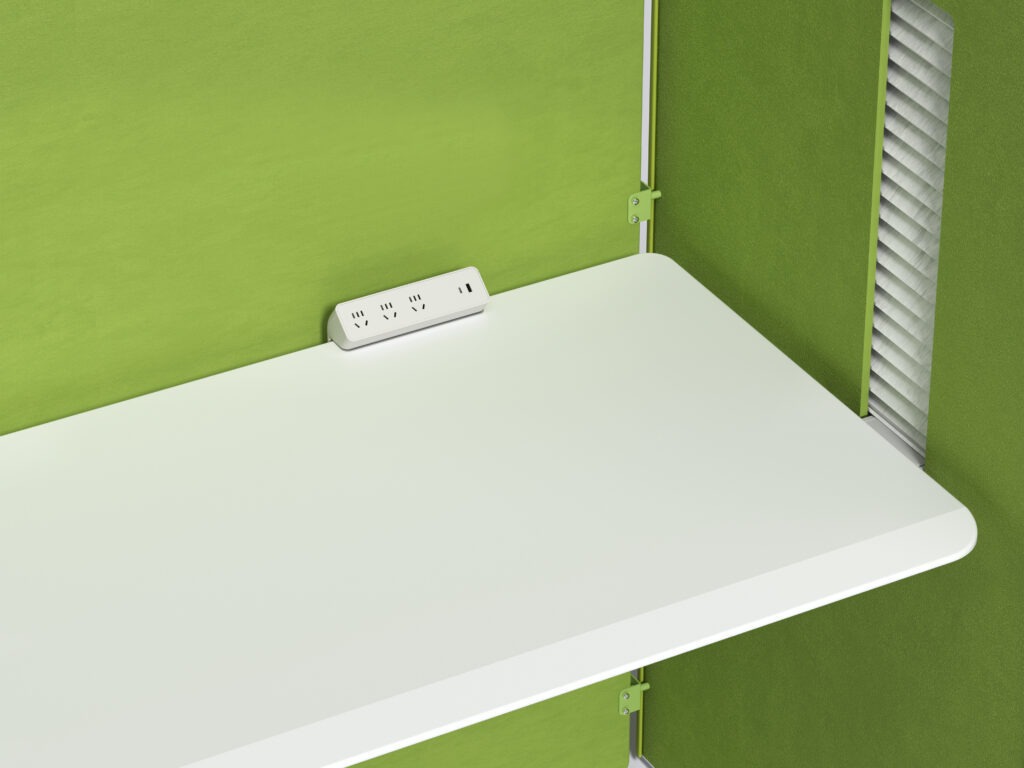
These details may not always be visible,but they continuously shape the long-term user experience.
In modern workplaces,
efficiency is not just about people—it is also about space.
The Cocoon Space Desk AK-GDZ-TYZB2-M02
redefines how space contributes to productivity
through structure and system design.
👉 If you are planning an open office environment,
feel free to contact us for a customized workspace solution.