
In traditional office furniture logic, “one person = one way of working” was once regarded as the default assumption.
The height, form, and functions of a desk were fixed at the moment of design, and users were expected to adapt to the product.
However, in real working environments, the same person—at different times, in different states, and at different stages of tasks—often has very different, even contradictory, requirements for their workstation.
The challenge of today’s office space is no longer “providing different desks for different people,”
but rather—how one desk can accommodate the constantly changing needs of the same person.

1.One Person, Different Times: Overlooked Real-World Scenarios
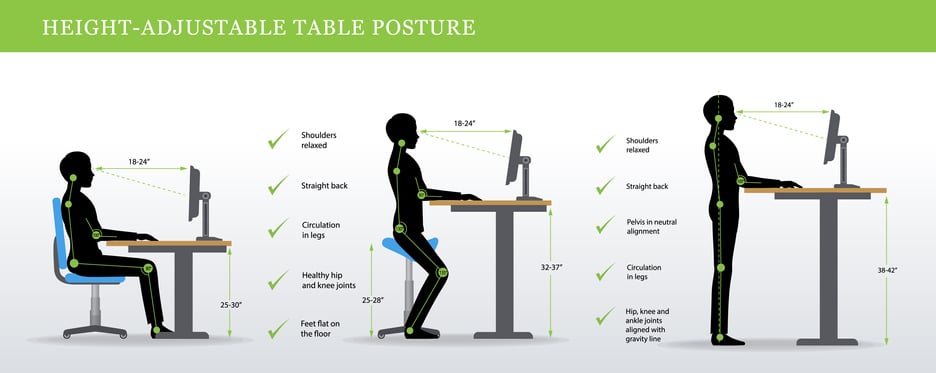
From the user’s perspective, a complete workday usually involves multiple state transitions:
- High-focus work: requires a stable, low-interference seated posture
- Discussion and collaboration: requires a more open desk height and viewing angle
- Short task handling: preferred to be completed quickly while standing
- Long working hours: require posture changes to relieve physical strain
These changes are not “personalized preferences,” but inevitable variations over time.
The problem is that
if a desk only supports one single working state, then for the rest of the day, the user is forced to compromise.
2.The Core of Inclusive Adjustment: Not “Multi-function”, but “Switchable”
True inclusive office design is not about continuously adding functional modules,
but about allowing the same product to switch naturally between different working states.
- From a product design perspective, this means:
- The desk is no longer a piece of furniture with a fixed height
but a foundational workstation that supports changing work rhythms
The value of height adjustment does not lie in “how high it can go,”
but in whether it can support frequent transitions in a stable, smooth, and predictable manner.


3.How Can One Desk Adapt to Diverse Needs?
3.1.Adjustable Height: Supporting Posture, Not Creating Burden
The essence of height adjustment is not parameters, but continuity of experience.
- Whether the transition between sitting and standing is smooth
- Whether stability is maintained across different height ranges
- Whether the structure remains reliable under high-frequency adjustment
Only when height adjustment becomes a “psychologically effortless action”
does the desk truly participate in the user’s work rhythm, rather than passively existing.
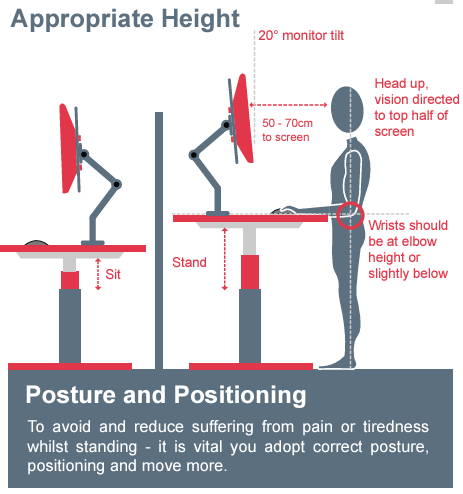
3.2.Stability: Ensuring Change Does Not Become a Risk
For users, change itself should not create a sense of insecurity.
During lifting motion or when working at standing height,
any wobble, structural weakness, or noise will be significantly amplified.
Therefore, the prerequisite for inclusive use is:
no matter which height or working state the desk is in,
it should deliver a consistent level of stability.
3.3.Expandability: Leaving Space for Future Needs
Human needs change, and so do usage scenarios.
- The number of monitors may increase
- Devices and peripherals continue to evolve
- Workspace layouts are adjusted over time
A truly inclusive desk should provide expandability at both the structural and system levels,
rather than only satisfying the current configuration.
4.From “Adapting People” to “Understanding People”: A Shift in Product Design Logic
Behind inclusive office design lies a fundamental transformation in product logic:
- From “asking people to adapt to the desk”
- To “designing desks that understand human change”
This requires that, from the R&D stage, product design considers:
- Usage frequency and product lifecycle
- Structural load behavior under different working states
- Long-term performance consistency over extended use
Instead of only emphasizing specifications or appearance at the presentation stage.


True Inclusivity Means Long-Term Support
The same person will have different needs at different times.
A truly well-designed desk should not force users to change their rhythm,
but quietly and continuously support change itself.
Inclusive office design is not about creating one desk for “everyone,”
but about providing a long-term reliable foundation
that consistently adapts to each individual’s evolving working states.
This is the true value of a desk.